
Klinefelter Syndrome Azoospermia Can Sperm Be Found
A diagnosis of azoospermia can feel final. When it is linked with Klinefelter syndrome, the first question is often simple and urgent: is there any sperm at all?
The answer is sometimes yes. Many people with Klinefelter syndrome have no sperm seen in the ejaculate, but that does not always mean the testicles contain no sperm. In selected cases, sperm may be found directly from testicular tissue using specialist sperm retrieval surgery, most often with microdissection TESE.
This article explains why Klinefelter syndrome azoospermia happens, how sperm retrieval works, what happens if sperm is found, and what options remain if it is not.
This information is general and educational. Fertility decisions should be made with a specialist who can review hormone results, genetic findings, testicular health, and personal goals.

What Is Azoospermia?
Azoospermia means no sperm are seen in the semen when a sample is examined under a microscope. It is usually confirmed after at least one repeat semen analysis, because results can vary between samples.
There are two broad types.
Obstructive azoospermia
Sperm production may be normal, but a blockage stops sperm from reaching the ejaculate. This can happen after infection, surgery, congenital absence of the vas deferens, or scarring.
Non obstructive azoospermia
The main issue is sperm production within the testicles. This is the type most often linked with Klinefelter-related infertility.
In non obstructive azoospermia, the testicles may still contain tiny pockets where sperm production continues. These pockets can be uneven and hard to find, which is why the type of retrieval technique matters.
Why Does Klinefelter Syndrome Cause Azoospermia?
Most people with Klinefelter syndrome have an extra X chromosome, commonly written as 47,XXY. This genetic pattern affects testicular development and function.
The testicles usually have two key roles:
Making testosterone
Producing sperm
In Klinefelter-related infertility, the sperm-producing tissue inside the testicles often becomes reduced over time. The small tubes where sperm develop, called seminiferous tubules, may lose many of the cells needed for sperm production.
This can lead to:
Very low sperm count
Severe oligospermia in some cases
Non obstructive azoospermia in many diagnosed adults
Higher FSH and LH hormone levels, reflecting reduced testicular function
Lower testosterone in some people
That said, Klinefelter syndrome sperm production is not always identical from person to person. Mosaic forms, where only some cells carry the extra X chromosome, may be associated with a better chance of sperm in the semen or testicle. Even in non-mosaic cases, small areas of sperm production may remain.
Is Azoospermia Always Complete in Klinefelter Syndrome?
No. Azoospermia and Klinefelter syndrome often occur together, but it is not always complete from the start.
Some people have rare sperm seen in the ejaculate. Others may have severe oligospermia, which means sperm are present but in very low numbers. In these cases, sperm may sometimes be frozen from ejaculated samples if enough suitable sperm are found.
A semen analysis should be handled carefully. If the count is extremely low, the lab may need to centrifuge the sample and search the pellet. A standard quick check may miss very rare sperm.
This is why evaluation by a male fertility specialist matters. The right testing can help separate three different situations:
Finding | What it may mean |
Sperm seen in semen | Ejaculated sperm may be frozen or used with IVF and ICSI |
No sperm in semen, testicles normal size | Obstruction may need to be ruled out |
No sperm in semen, small testicles and high FSH | Non obstructive azoospermia is more likely |
Can Sperm Be Found in the Testicles?
Sometimes, yes. The key point is that no sperm in the ejaculate does not always equal no sperm in the testicles.
In Klinefelter syndrome, sperm production can be patchy. One area of the testicle may produce no sperm, while another tiny area still contains mature sperm. The challenge is finding those areas without removing too much tissue.
Klinefelter syndrome sperm retrieval is not guaranteed. Results vary based on factors such as:
Age
Testicular size
Hormone profile
Previous testosterone treatment
Mosaic or non-mosaic chromosome pattern
Surgical technique
Experience of the surgical and embryology team
The sperm found during retrieval are usually few in number. They are not used for standard insemination. They are typically used with IVF and ICSI, where a single sperm is injected into an egg.
What Is Testicular Sperm Extraction?
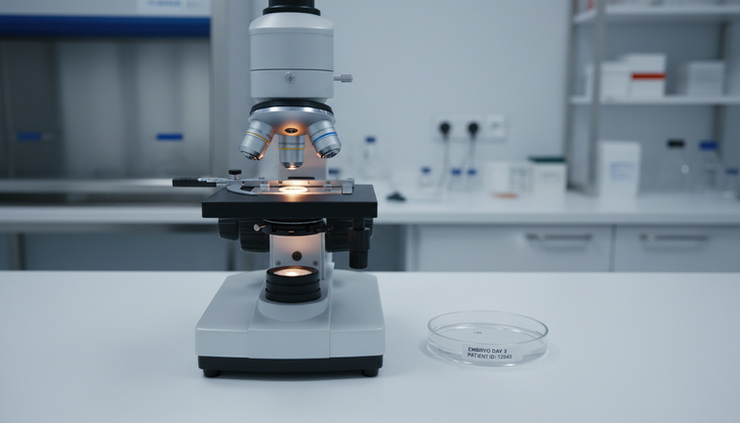
Testicular sperm extraction, often shortened to TESE, is a surgical procedure that removes small samples of testicular tissue. An embryology team then examines the tissue to look for sperm.
For Klinefelter TESE, the goal is not to drain stored sperm, as would happen in a blockage. The goal is to search for small areas where sperm production may still be active.
There are different approaches.
Conventional TESE
Small tissue samples are taken from one or both testicles. This may find sperm, but it involves sampling without seeing the microscopic pattern of the tubules in detail.
Microdissection TESE
The surgeon uses an operating microscope to examine the testicular tissue in greater detail. This can help identify tubules that look more likely to contain sperm.
For non obstructive azoospermia, especially in Klinefelter-related cases, microdissection TESE is often preferred in specialist centres.
What Is Microdissection TESE?
Microdissection TESE is often called micro-TESE. In the context of micro TESE Klinefelter treatment, the procedure is designed to search the testicle in a targeted way.
During surgery, the testicle is opened through a small incision. Under magnification, the surgeon looks for tubules that appear larger or healthier than surrounding tissue. These areas may have a higher chance of containing sperm.
The embryology team examines tissue samples during or after the operation. If sperm are found, they may be frozen or used fresh, depending on the fertility plan and clinic setup.
Micro-TESE has several aims:
Improve the chance of finding rare sperm
Remove less unnecessary tissue
Give the embryology team targeted samples
Reduce repeated blind sampling
It is still surgery, and it still carries risks. Swelling, bruising, discomfort, bleeding, infection, and temporary or longer-term changes in testosterone can occur. A specialist should explain these risks before treatment.
How Is Sperm Retrieval Performed?
The exact pathway varies between clinics, but sperm retrieval surgery usually follows a structured process.
Before surgery, assessment may include:
Semen analyses, often repeated
Hormone tests, including FSH, LH, testosterone, and sometimes prolactin or oestradiol
Genetic testing and karyotype confirmation
Testicular examination and sometimes ultrasound
Review of medications, testosterone use, and general health
Discussion with an IVF team if treatment is planned with eggs
The procedure is usually done under anaesthetic. Some centres use general anaesthesia, while others use local anaesthetic with sedation, depending on the case and patient preference.
After surgery, most people need a short recovery period. Supportive underwear, simple pain relief, rest, and avoiding heavy activity are commonly advised. The clinic will give specific instructions.
If both partners are involved in IVF treatment, timing matters. Some clinics prefer to freeze sperm before egg collection. Others may carry out retrieval on the same day as egg collection. Freezing sperm first can reduce pressure on the day, but the best plan depends on the case.

What Happens If Sperm Is Found?
If sperm are found, the embryology team assesses whether they are suitable for freezing or immediate use. In many Klinefelter cases, sperm numbers are low, so every usable sperm matters.
Freezing can allow future use without repeating surgery, although survival after thawing depends on sperm quality and lab handling. Some clinics may freeze tiny tissue samples that contain sperm rather than individual sperm alone.
Finding sperm does not guarantee a pregnancy. It creates the possibility of IVF with ICSI. The egg quality, embryo development, uterine factors, age of the egg provider, and genetic considerations all affect the chance of success.
Using Retrieved Sperm with ICSI
ICSI stands for intracytoplasmic sperm injection. It is a laboratory IVF technique where a single sperm is injected directly into an egg.
Retrieved testicular sperm from Klinefelter cases are usually used this way because the numbers are too low for standard IVF. ICSI bypasses the need for sperm to swim to and penetrate the egg on their own.
The general pathway is:
Eggs are collected during IVF treatment.
The embryologist prepares retrieved sperm.
A single sperm is selected and injected into each mature egg.
Fertilised eggs are grown as embryos.
Suitable embryos may be transferred or frozen.
Some people also discuss pre-implantation genetic testing with their clinic. This is a personal decision and depends on the couple’s history, age, embryo numbers, and advice from the genetics and IVF teams.
What If No Sperm Is Found?
A failed retrieval is difficult. It can feel like the end of a long process, especially after tests, appointments, and surgery.
If no sperm are found, the team should explain what was done, whether both testicles were searched, and whether the procedure was conventional TESE or micro-TESE. This helps guide next steps.
Options may include:
Reviewing whether another retrieval attempt is reasonable
Checking testosterone and recovery after surgery
Considering donor sperm treatment
Considering donor embryos
Exploring adoption or fostering
Choosing a child-free path
A second attempt is not always advised. It depends on the first surgery, the amount of tissue examined, hormone status, recovery, and whether the potential benefit outweighs the risk.
Genetic Counselling Before Fertility Treatment
Genetic counselling is strongly recommended before fertility treatment using sperm from someone with Klinefelter syndrome.
Counselling can explain:
What the chromosome result means
The chance of passing on chromosomal differences
Testing options before or during pregnancy
IVF embryo testing possibilities
The limits of any test
This is not about pushing one decision. It is about making sure people understand the medical, emotional, and family implications before treatment starts.
A fertility counsellor can also help with the emotional side of Klinefelter infertility. Decisions about sperm retrieval, donor sperm, IVF, and genetic testing can be heavy. Clear support makes the process less isolating.
When Should Sperm Retrieval Be Considered?
Sperm retrieval should be considered when a person with Klinefelter-related azoospermia wants the chance of having a genetically related child and understands that success is uncertain.
It may be helpful to speak to a specialist sooner rather than later, particularly if:
Semen analysis shows azoospermia or extremely low sperm numbers
Hormone tests suggest reduced sperm production
Testosterone treatment is being considered or has already started
IVF planning is underway
There is uncertainty about whether any sperm should be frozen now
Testosterone treatment can improve symptoms of low testosterone, but it may suppress sperm production in some situations. Anyone hoping for sperm retrieval should discuss timing with a male fertility specialist before starting or changing hormone therapy.

For personalised advice on testing, timing, and fertility options, you can book a male fertility consultation.
FAQs
Is azoospermia common in Klinefelter syndrome?
Yes. Azoospermia is common because Klinefelter syndrome often affects sperm production inside the testicles. It is usually a form of non obstructive azoospermia.
Can a man with Klinefelter syndrome have sperm?
Yes, some do. Sperm may rarely appear in the ejaculate, especially in mosaic cases, or may be found directly in the testicles through surgical retrieval.
Can micro-TESE find sperm?
Micro-TESE can find sperm in some people with Klinefelter-related azoospermia, but it cannot guarantee success. The chance depends on individual factors and the experience of the surgical and laboratory team.
What happens if sperm retrieval fails?
The clinic should review the operation and discuss realistic next steps. These may include no further surgery, a carefully considered second attempt, donor sperm, donor embryos, adoption, fostering, or taking time before deciding.
Is TESE painful?
TESE is performed with anaesthesia, so pain during the procedure should be controlled. Soreness, bruising, and swelling can happen afterwards, but clinics usually provide recovery guidance and pain relief advice.
Can retrieved sperm be used for IVF?
Yes. Retrieved sperm are usually used with IVF and ICSI. ICSI allows an embryologist to inject a single sperm directly into a mature egg.
Klinefelter-related azoospermia does not always mean there is no route to biological parenthood. The main step is getting the right assessment, from a team experienced in male infertility surgery, sperm retrieval, embryology, and genetic counselling. The answer may not be simple, but it can be investigated carefully and realistically.
Book Your Consultation with a Fertility Expert
Accurate diagnosis is the first step toward effective treatment. If you are looking for a tailored, expert-led plan for managing Klinefelter syndrome and male infertility, you can book a consultation with Professor Amr Raheem:
Consultant Andrologist at The Male Factor Fertility in London.
Professor at Cairo University and former Senior Lecturer at University College London (UCL).
Brings over 25 years of specialized experience in diagnosing and treating the most complex cases of male infertility, particularly non-obstructive azoospermia and advanced Micro-TESE surgical retrieval.
Internationally recognized researcher and author, having co-authored specialized medical book chapters specifically on "Klinefelter Syndrome" and male reproductive medicine.



Comments